
Looking for a practical weekly meal prep guide that actually makes your life easier—not more complicated? You’re in the right place. Whether you’re trying to save time, cut food waste, eat healthier, or simply avoid the daily “what’s for dinner?” stress, this article is designed to give you a clear, doable plan you can stick to.
We break down smart prep strategies, flavor-forward recipe ideas, and efficient kitchen hacks that help you build balanced meals without spending your entire Sunday cooking. You’ll also discover creative ways to use versatile ingredients—especially beans—to add nutrition, variety, and global flair to your weekly menu.
Our approach is rooted in hands-on kitchen testing, current food trends, and practical techniques that work in real homes. By the end, you’ll have a streamlined system for prepping meals that taste great all week—and a strategy you can repeat with confidence.
This weekly meal prep guide turns kitchen chaos into calm. If you’ve ever stared at the fridge like it owes you money, you’re not alone. Meal prepping—cooking and portioning food ahead of time—saves cash and sanity. Critics say it’s boring, but flavor combos prove otherwise (your tastebuds deserve better). Step One: plan three proteins, two grains, and roasted veggies. Shop once. Cook once. Eat happily all week. Pro tip: season boldly; leftovers mellow.
| Day | Dinner |
|---|---|
| Mon | Chili |
| Tue | Stir-fry |
| Wed | Salad |
Batch beans, grill chicken, portion rice. Suddenly, weeknights feel less “What’s for dinner?” and more “Microwave, please.” Fewer dishes, fewer decisions, more smug satisfaction. You’ve got this.
Why Meal Prep is a Non-Negotiable Kitchen Skill
Last year, I realized I was spending $15 on lunch every weekday. That’s $75 a week, roughly $300 a month. When I switched to a $4 prepped lunch, my weekly cost dropped to $20. The savings were obvious, but the mental clarity surprised me.
Meal prep—planning and cooking meals in advance—eliminated decision fatigue, the mental drain from constant choices (what’s for dinner again?). With a simple weekly meal prep guide, I stopped negotiating with cravings.
- Financial win: planned groceries beat last-minute takeout and impulse buys.
- Total food control: I manage portions, protein, and hidden sodium or sugars.
Some argue meal prep feels rigid or time-consuming. I get it—I thought it would steal my Sunday. But two focused hours gave me freedom all week (like future-me sending a thank-you note). It’s not just cooking; it’s strategy for health goals and sanity and confidence.
The 5-Step Weekly Meal Prep Blueprint
If you’ve ever stared into your fridge on Wednesday night wondering what went wrong, this is your fix. Think of this as your practical weekly meal prep guide—simple, flexible, and built for real life.
1. The “Theme” Plan
Instead of picking five unrelated recipes, choose one theme for the week. Think Taco Bowl Week, Mediterranean Mix, or Bean-Powered Comfort Food. A theme narrows your ingredient list and prevents half-used herbs from wilting in the crisper (we’ve all been there). It also sparks creativity—black beans can become tacos Monday and stuffed sweet potatoes Thursday.
2. The Smart Shopping List
Build your list around overlapping ingredients. If three meals use bell peppers, buy them in bulk. Group items by store section:
- Produce (greens, onions, herbs)
- Protein (chicken, tofu, beans)
- Pantry (quinoa, spices, olive oil)
This saves time and reduces impulse buys. Pro tip: Check what you already have before shopping. And if you’re unsure about storage, review how to store fresh produce to maximize shelf life so your ingredients last all week.
3. The “Component” Cook
Here’s the game-changer: don’t cook full meals—cook components. Roast a sheet pan of vegetables, grill or bake all your protein, simmer a pot of beans, and prepare a grain like quinoa or rice. “Batch cooking” (preparing large quantities at once) gives you mix-and-match flexibility. Tuesday’s bowl can become Friday’s wrap. This method reduces decision fatigue and food waste while keeping flavors fresh.
4. The Assembly Line
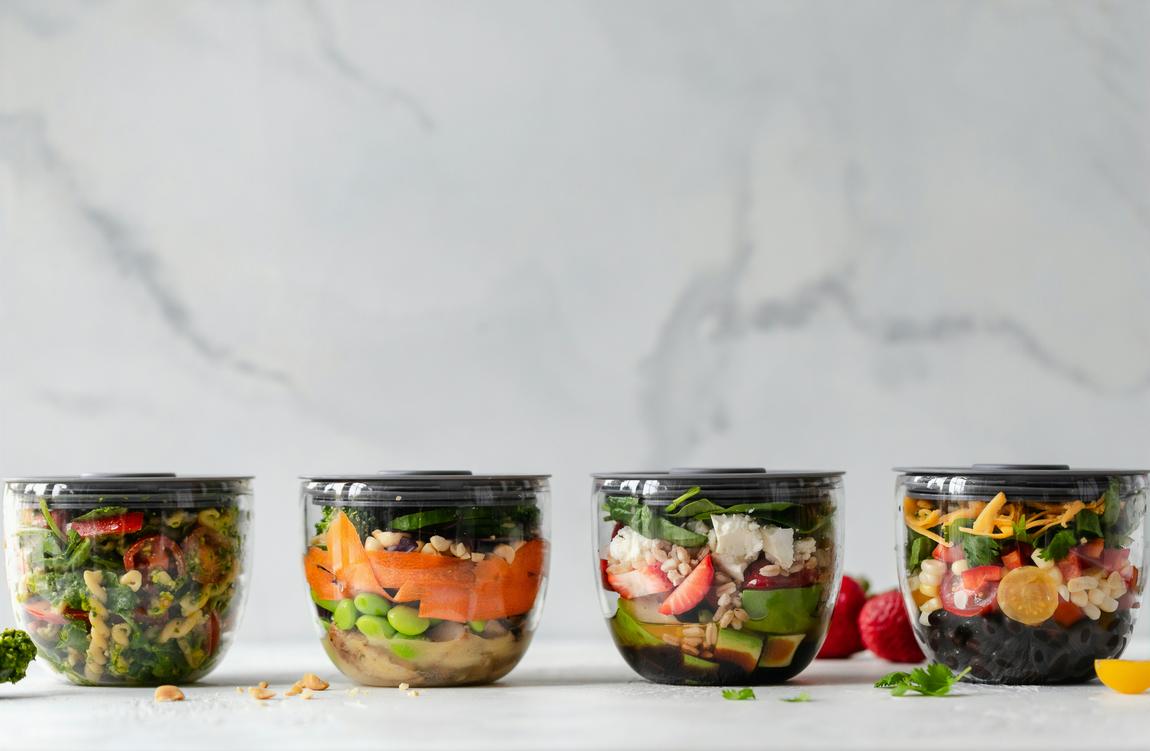
Lay out containers and build 3–4 days of meals at once. Keep dressings, sauces, and crunchy toppings separate to avoid sogginess. Store leafy greens above heavier ingredients so they don’t bruise.
5. The Strategic Freeze
Freeze extra grains, beans, or cooked proteins midweek. They’ll stay fresh and rescue you on busy nights.
The Only Gear You Really Need (And What to Skip)
I used to think better gear meant better meal prep. Spoiler: it mostly meant clutter.
The Essentials are simple: high-quality, leak-proof containers (glass is durable and stain-resistant; plastic is lighter and cheaper), a large baking sheet, a sharp chef’s knife, and a sturdy cutting board. A chef’s knife is an all-purpose blade designed for chopping, slicing, and dicing efficiently. I once tried prepping with a dull knife and a tiny board—twice the time, three times the frustration.
Nice-to-Haves include an immersion blender (a handheld tool for pureeing soups directly in the pot), a food processor, and a digital food scale for portion accuracy. Helpful, yes. Essential? Not really.
What You Don’t Need: single-use gadgets. I bought an avocado slicer. Used it twice. Lesson learned.
If you’re following a weekly meal prep guide, start with what’s already in your kitchen. Upgrade only when a real limitation—not shiny marketing—gets in your way.
Meal prep gets boring when flavors stay static, but research shows variety increases meal satisfaction and adherence to healthy eating plans (Journal of Nutrition Education, 2021). In other words, changing taste keeps you consistent.
First, lean into the power of sauces. Preparing two or three versatile options—say, a sharp vinaigrette, creamy yogurt-dill, and savory peanut sauce—lets the same grilled chicken and rice taste Mediterranean on Monday and Thai-inspired by Wednesday. Moreover, sauces add moisture, which sensory studies link to higher perceived flavor intensity.
Next, try the “finisher” method. A squeeze of lemon, handful of parsley, sprinkle of toasted nuts, or crumble of feta added just before eating boosts aroma compounds, which begin degrading after chopping. As a result, leftovers feel freshly made.
Finally, rotate beans. Black beans power burrito bowls; chickpeas bulk up salads; white beans blend into creamy mashes. According to the USDA, beans deliver about 15 grams of fiber per cup, supporting fullness and gut health. When you follow a weekly meal prep guide, these swaps stretch budgets and prevent flavor fatigue. Pro tip: store sauces separately to maintain texture.
Altogether, small flavor shifts create measurable improvements in dietary consistency and enjoyment. Over time, habits become effortless. Sustainable.
Your First Step to a Stress-Free Week
You now have the exact framework to stop worrying about daily meals and start enjoying the freedom of being prepared. The 5 PM scramble is decision fatigue in action (and yes, hangry is real).
Here’s the fix: a simple component system from your weekly meal prep guide.
- PICK A THEME (Mediterranean, Tex-Mex, Comfort Food).
- COOK 3–4 BASES: grains, proteins, roasted veggies, sauces.
- MIX AND MATCH nightly.
Example: roast chicken, quinoa, black beans, and peppers on Sunday; build bowls, wraps, or soups all week.
Pro tip: prep sauces last—they keep flavors fresh.
Commit two hours. Future-you wins.
Bring More Flavor and Simplicity to Your Table
You came here looking for fresh inspiration, smarter kitchen strategies, and creative ways to make bean-based meals more exciting. Now you have the ideas, flavor trends, and practical tips to turn everyday cooking into something satisfying and stress-free.
When meals feel repetitive or time feels tight, it’s easy to fall back on takeout or bland basics. But with the right approach, beans can become the most versatile, budget-friendly, and nutrient-packed ingredient in your kitchen.
The next step is simple: put what you’ve learned into action. Start with a plan, experiment with one new global flavor this week, and build consistency with a weekly meal prep guide that keeps you organized and inspired.
If you’re ready to stop guessing what to cook and start creating bold, reliable meals with confidence, explore more of our top-rated recipes, trending flavor breakdowns, and step-by-step kitchen hacks. Join thousands of home cooks who are transforming simple ingredients into unforgettable dishes.
Your pantry is ready. Your next great meal starts now.