
If you’re here, you’re probably craving more than just another recipe—you want fresh culinary buzz, exciting flavor trends, and creative ways to level up your time in the kitchen. This article is designed to satisfy that search. From global cuisine highlights to innovative bean-based creations, we’re diving into what’s shaping modern plates and how you can bring those ideas home with confidence.
We’ve explored emerging food trends, tested flavor pairings, and analyzed techniques that actually work in everyday kitchens. The result? Practical insights rooted in real cooking experience, not just theory.
You’ll discover smart kitchen hacks, inspired ingredient combinations, and approachable methods that strengthen your essential culinary skills while keeping meals exciting. Whether you’re experimenting with plant-based proteins or refining classic techniques, this guide will help you cook with more creativity, precision, and flavor—without overcomplicating the process.
Your Culinary Foundation Starts Here
Start with an anecdote about burning garlic on a first date. I still remember following a recipe perfectly, yet serving bitter pasta. That failure taught me that mastering essential culinary skills matters more than memorizing steps. Techniques like sautéing—cooking food quickly in hot fat—and deglazing, loosening browned bits with liquid, build flavor intentionally. Some argue creativity can’t be taught; I disagree. When you understand why salt enhances sweetness and acid balances richness, improvisation becomes natural. In my kitchen, practice, patience, and tasting constantly turned anxiety into confidence. Learn the foundations, and you’ll cook boldly.
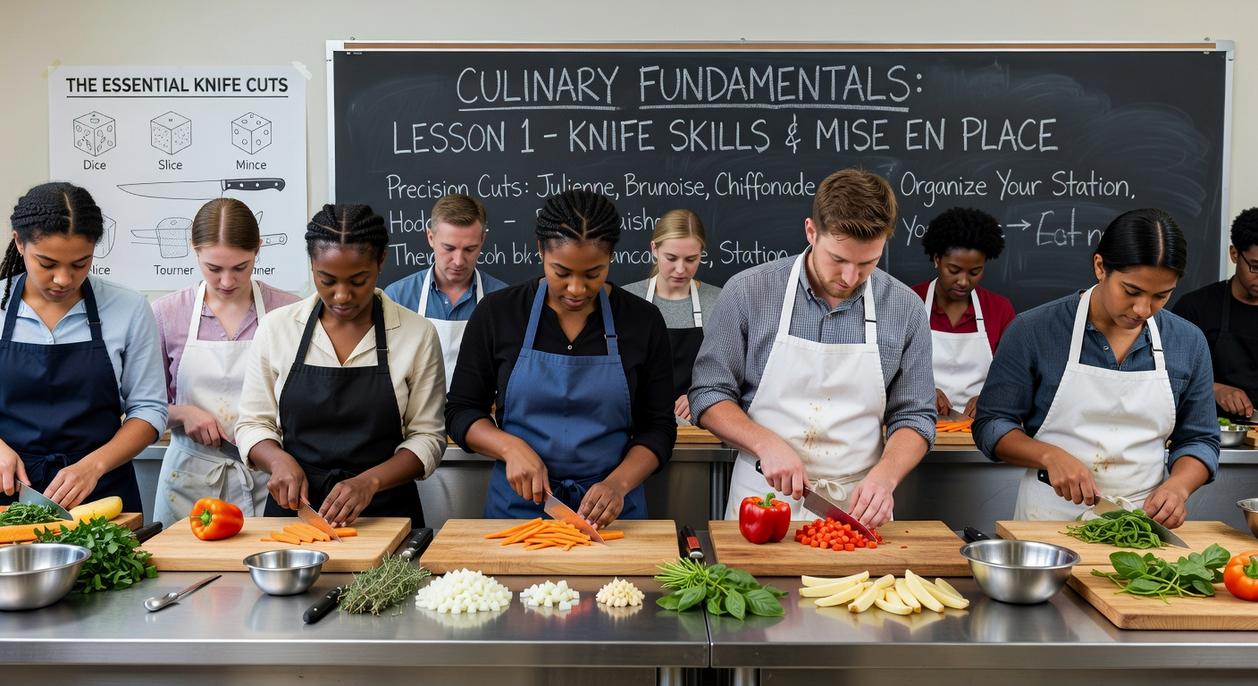
Knife mastery is backbone of cooking. When your cuts are consistent, food cooks evenly, plates look professional, and prep time shrinks (yes, even on a busy weeknight). Many guides stop at naming cuts, but understanding why they matter sets you apart.
The Foundational Cuts
A dice means cutting food into uniform cubes; think diced onions for a mirepoix, where even pieces melt at the same rate. Julienne refers to thin matchsticks, perfect for carrots in a slaw or peppers in a stir-fry. Chiffonade, used for leafy herbs, creates ribbons of basil that distribute flavor without bruising.
Equally important is how you hold the knife. The pinch grip—thumb and index finger gripping the blade ahead of the handle—maximizes control and reduces wrist strain. Meanwhile, form a claw with your non-dominant hand, tucking fingertips under to guide the blade safely.
Master these essential culinary skills, and speed, safety, and precision follow.
Building Flavor with Dry-Heat Cooking
Dry-heat cooking is where flavor gets serious. When heat meets protein and sugar, magic happens.
The Science of Searing
The Maillard reaction is a chemical reaction between amino acids and reducing sugars that creates complex, savory flavors and that irresistible brown crust (think steakhouse aroma). Caramelization, by contrast, is the browning of sugar itself, producing nutty, slightly sweet notes—like the crackly top of crème brûlée. According to food scientist Harold McGee, these reactions generate hundreds of flavor compounds that simply don’t exist in raw food. Translation: no browning, no depth.
Some argue high heat “seals in juices.” It doesn’t (that’s a myth). What it does seal in is flavor through crust formation—and that’s worth it.
Sautéing vs. Searing
Sautéing cooks small, evenly cut pieces in a little fat over relatively high heat with constant movement. Searing uses very high heat and minimal movement to build a crust. If sautéing is a quick dance, searing is a dramatic stare-down (don’t touch the steak—seriously).
The Art of Roasting
Roasting surrounds food with ambient dry heat, cooking it evenly while encouraging browning. For success:
- Don’t overcrowd the pan (steam is the enemy of crispness).
- Use the right temperature—typically 375–425°F.
- Let meat rest to redistribute juices.
Pan-Frying
Pan-frying creates a crisp, golden exterior on cutlets or fillets using moderate oil depth. Keep oil around 350°F; too cool and food absorbs grease, too hot and it burns.
What’s next? Mastering these essential culinary skills means you can confidently tweak heat, timing, and texture. If you want to go further, learn how to read and adapt any recipe with confidence to make dry-heat techniques work for any cuisine.
Unlocking Tenderness with Moist-Heat Cooking
The Power of Low and Slow
Moist-heat cooking uses water, stock, or steam to transform tough ingredients into fork-tender bites. The magic lies in collagen—the connective tissue in meat that can feel chewy or rubbery. When exposed to gentle heat over time, collagen melts into gelatin, creating rich texture and depth (think of a pot roast that practically falls apart at the sight of a fork). For fibrous vegetables like cabbage or carrots, slow cooking softens cell walls without stripping flavor. The benefit? You get maximum tenderness with minimal effort—and a dish that tastes like it simmered all day because, well, it did.
Braising Explained
Braising is a two-step combination technique: first, sear with dry heat to build a golden crust (that’s the Maillard reaction, the browning that adds complexity), then simmer in liquid until tender. Some argue searing is unnecessary. However, skipping it means sacrificing layers of flavor in the final sauce. The payoff is twofold: succulent meat and a ready-made gravy. Pro tip: keep the liquid at a gentle simmer, not a boil, to avoid toughening the protein.
Simmering & Poaching
While both use liquid, simmering features small bubbles and works beautifully for stocks and soups. Poaching, by contrast, stays below bubbling—ideal for delicate eggs or fish. The advantage? Greater control and silkier textures.
Steaming
Finally, steaming surrounds food with vapor, preserving nutrients and natural flavor. It’s a cornerstone of essential culinary skills, especially for vegetables and dumplings. Clean taste, vibrant color, and no added fat—what’s not to love?
Bringing It All Together: Sauces & Emulsions
A great sauce does more than sit on a plate—it connects everything. It adds moisture, balances richness, and reinforces flavor. Think of gravy over roast chicken or pesto coating pasta (without it, things feel a little… unfinished).
Building a Pan Sauce (Deglazing)
Right after searing meat, don’t waste those browned bits—called fond. That’s flavor. Here’s how:
- Remove the meat and let it rest.
- Sauté aromatics like shallots or garlic.
- Deglaze with wine or stock, scraping the pan.
- Simmer until reduced and slightly thickened.
This is one of those essential culinary skills that instantly elevates home cooking.
The Basic Vinaigrette (An Emulsion)
An emulsion is when two liquids that normally separate—like oil and vinegar—are whisked together. Use a 3:1 oil-to-vinegar ratio. Add mustard as an emulsifier to help it stay blended.
Kitchen Hack
- Broken emulsion? Whisk in a teaspoon of warm water.
- Too thin? Reduce gently.
- Too thick? Add stock, one splash at a time.
From Cook to Confident Chef
You now hold the blueprint for culinary skill. We’ve moved beyond recipes into the techniques professionals rely on daily. Mastering knife work, dry heat, and moist heat forms the backbone of essential culinary skills. Precise dicing ensures even cooking; controlled searing at high heat triggers the Maillard reaction—the chemical browning that builds flavor (yes, steakhouse crust). Braising breaks down collagen into gelatin, transforming tough cuts into fork-tender bites.
Choose one technique this week:
- Practice it in isolation, focusing on heat control, timing, and texture.
This repetition builds confidence and creativity in every dish. Mastery follows.
You came here looking for fresh inspiration, smarter techniques, and exciting ways to bring bold flavors into your kitchen. Now you have the trends, hacks, and bean-based innovations to elevate everyday meals with confidence.
Cooking can feel repetitive when you’re stuck making the same dishes on autopilot. Without the right guidance, it’s easy to miss out on global flavors and the essential culinary skills that turn simple ingredients into unforgettable meals.
The next step is simple: start experimenting. Pick one new bean-based recipe, try one global flavor twist, and apply one new technique this week. Small upgrades create big flavor wins.
Bring More Flavor to Your Kitchen
Don’t let another meal feel ordinary. Join thousands of food lovers who are already transforming their kitchens with trend-forward recipes and practical cooking tips. Explore more flavor-packed ideas now and turn your next dish into your best one yet.