If you’re searching for fresh culinary inspiration, smarter kitchen techniques, and creative ways to elevate everyday meals, you’re in the right place. Today’s food lovers want more than just recipes—they want insight into flavor trends, practical kitchen hacks, and innovative ways to make ingredients like beans the star of the plate.
This article dives into the latest culinary buzz, from global cuisine highlights to inventive bean-based creations that bring both nutrition and bold taste to your table. You’ll also discover practical tips, including batch cooking strategies, that help you save time without sacrificing flavor.
Our insights are grounded in hands-on recipe testing, trend analysis across food communities, and deep exploration of global cooking traditions. That means you’re not just getting ideas—you’re getting thoughtfully curated, practical guidance you can trust and use immediately.
Let’s explore the flavors, techniques, and smart solutions shaping today’s modern kitchen.
It’s 5 PM. You’re tired, hungry, and staring into the fridge like it might magically suggest dinner (it won’t). That daily scramble adds stress, wasted money, and last-minute takeout. Instead, consider batch cooking not as a chore, but as a freedom plan. After years of testing efficient batch cooking strategies, I’ve found two techniques that consistently work: component prepping (cook versatile bases like grains and beans) and full-meal batching (prepare complete dishes ahead). Next, you’ll need smart storage—airtight containers and clear labels are game changers. From there, expect smoother evenings, healthier choices, and far fewer “What’s for dinner?” debates.
Your Batch Cooking Blueprint: Planning and Essential Gear
1. The Mindset Shift
First, let’s simplify this. Batch cooking strategies don’t mean prepping seven different dinners in one heroic Sunday sprint (unless you enjoy chaos). Instead, start with 2–3 recipes that share ingredients. That’s it. “Batch cooking” simply means preparing multiple servings at once to save time later. I’ll admit, there’s debate over the “perfect” number of meals to prep—some swear by a full week, others tap out at three days. Honestly, it depends on your schedule and fridge space.
2. The Shopping List Hack
Next, build your list around overlapping ingredients. If two recipes use onions, spinach, or beans, buy in bulk and split them. This reduces food waste and stretches your budget (your wallet will notice).
3. Essential Tools Only
Finally, skip fancy gadgets. You need:
- Glass storage containers
- A large sheet pan
- A sturdy pot or Dutch oven
- Freezer-safe labels
That’s the foundation. Everything else? Optional.
Technique #1: The “Component Cooking” Method for Ultimate Flexibility
Component cooking means preparing individual ingredients in bulk so you can mix and match them into different meals all week. Instead of making five full recipes, you cook building blocks. The result? Zero flavor fatigue (because Tuesday’s bowl doesn’t have to taste like Monday’s).
A friend once told me, “I’m tired of eating the same leftovers three days in a row.” That’s exactly the problem this method solves.
1. Grains: Your Flexible Base
Cook a big batch of quinoa, rice, or farro at the start of the week. Rinse grains first to remove excess starch. Use a 2:1 liquid-to-grain ratio for most varieties, then let them steam off heat for 10 minutes for better texture. Fluff with a fork. Store in airtight containers for up to four days. One night it’s a burrito bowl; the next, it’s fried rice (yes, day-old rice is actually better for that).
2. Proteins: Mix-and-Match Power
Bake chicken breasts at 400°F for 20–25 minutes with olive oil and salt. Roast chickpeas until crispy for salads or tacos. Simmer lentils for 20 minutes with bay leaf and garlic. “Think of protein as your anchor,” a meal-prep coach told me. “Season simply now, customize later.”
3. Vegetables: Roast Once, Use Everywhere
Spread broccoli, bell peppers, and onions on one large sheet pan. Roast at 425°F until caramelized. These add instant depth to wraps, bowls, or omelets.
Use batch cooking strategies to save time while keeping meals exciting and endlessly adaptable.
Technique #2: The “Full Meal” Method for Grab-and-Go Ease”
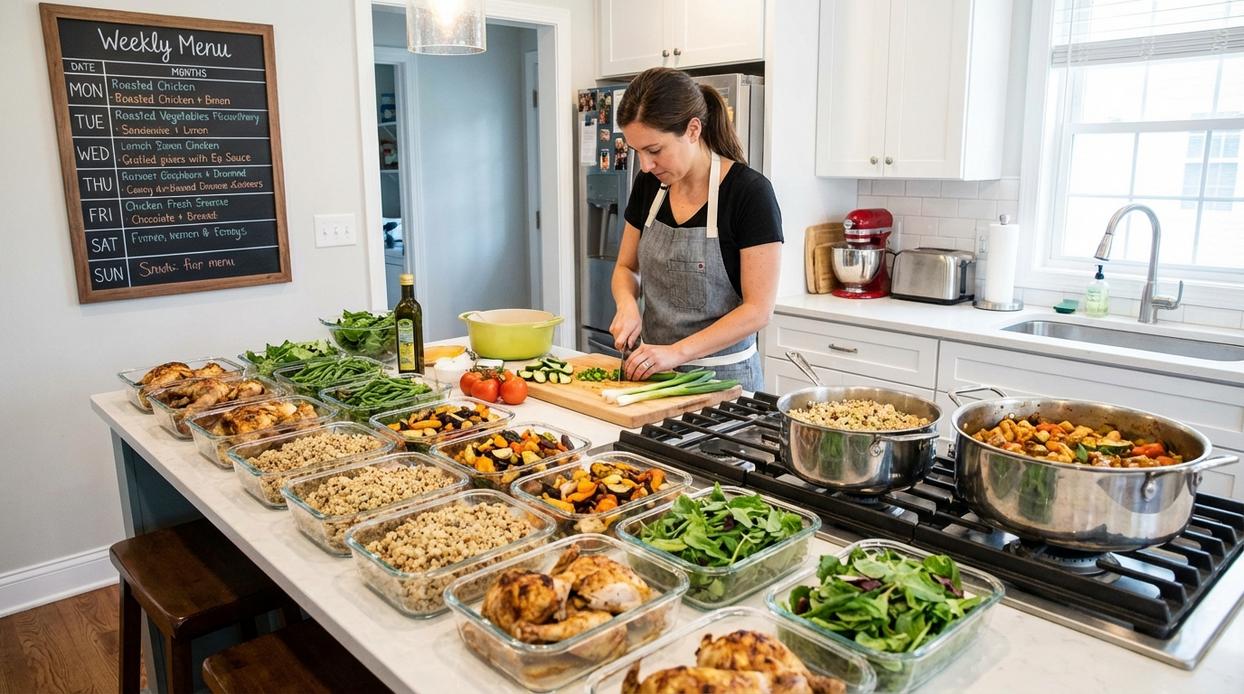
The Full Meal Method is exactly what it sounds like: cook complete, portioned meals ahead of time so they only need reheating. No side dishes to scramble together. No “what goes with this?” moments at 6:47 p.m. (we’ve all been there). It’s especially useful for lunches or ultra-busy weeknights when cooking from scratch feels… optimistic.
At its core, this approach relies on smart batch cooking strategies—preparing multiple servings at once to save time and energy later. I’ll admit, there’s debate about whether reheated meals ever taste as good as fresh. Sometimes they don’t. But done right, they come surprisingly close.
Perfect Freezer-Friendly Meals
Not every dish freezes well. Cream-heavy sauces can separate, and delicate greens may turn limp. When in doubt, test a small portion first.
Example – Soups and Stews
A big pot of black bean chili or lentil soup is a classic for a reason. Legumes hold texture beautifully after freezing. Cool the pot completely (steam should stop rising), then portion into airtight containers. Pro tip: leave a little space at the top—liquids expand when frozen.
Example – Casseroles and Bakes
Baked ziti or enchilada casseroles can be sliced into individual servings before freezing. Reheat covered to prevent drying out. Honestly, some casseroles taste better the next day (leftover magic is real).
Example – Grain Bowls
Assemble 3–4 grain bowls at once: cooked quinoa or rice, roasted vegetables, beans, and a protein. Keep wet ingredients separate until serving for freshness.
If you’re upgrading your prep setup, check out essential kitchen tools that make cooking easier.
Mastering Storage: How to Keep Your Food Fresh and Safe
The golden rule of cooling is simple: let food reach room temperature before refrigerating or freezing. Putting steaming leftovers straight into the fridge traps heat, raising the internal temperature and encouraging bacterial growth. The USDA advises cooling foods within two hours to reduce risk.
Use your fridge for meals you’ll eat in 3–4 days; freeze anything longer. Soups, cooked beans, and casseroles handle freezing beautifully. When using batch cooking strategies, portion meals into airtight containers.
To prevent freezer burn—those dry, grayish patches—remove as much air as possible and seal tightly. Press plastic wrap directly onto the food’s surface before lidding for extra protection.
Finally, label everything. A simple marker note—contents and date—prevents mystery containers and cuts waste. Pro tip: keep a “eat first” bin so older items stay visible. Your future self will thank you and your wallet too, later.
Your First Step to Effortless Weekday Meals
If weeknights feel chaotic, you’re not alone. The daily “what’s for dinner?” scramble drains time, money, and mental energy. But with component cooking or full-meal prep, you have a clear path out. Think of it as culinary autopilot (minus the turbulence).
Here’s what most guides miss: smart batch cooking strategies focus on flavor layering, not just volume. Cook once, remix all week.
- Prep one versatile grain to anchor multiple meals.
- Make one hearty soup that improves by Wednesday.
Two focused hours on Sunday can reclaim your evenings. Start small this week—and taste the difference firsthand.
Bring More Flavor and Ease Into Your Kitchen
You came here looking for smarter ways to stay on top of food trends, simplify your cooking routine, and make the most of every ingredient. Now you have the inspiration and practical ideas to do exactly that.
Keeping up with flavor trends and mastering batch cooking strategies isn’t just about saving time — it’s about reducing stress, cutting waste, and bringing excitement back to your meals. When your kitchen feels overwhelming, having go-to hacks and globally inspired ideas makes all the difference.
The next step is simple: put one new tip into action this week. Try a bean-based twist on a favorite dish, plan your meals ahead, and experiment with bold flavors you’ve been curious about.
If you’re ready to stop scrambling for dinner ideas and start cooking with confidence, join the thousands of home cooks who rely on our trusted insights for fresh inspiration. Explore more recipes, trends, and kitchen hacks today — and turn every meal into something worth savoring.